
When you are responsible for keeping fluid moving through a plant, a mine site, a treatment works, or a vessel, the centrifugal pump is very likely the piece of equipment you rely on most. It is the workhorse behind municipal water supply, industrial process circuits, wastewater collection systems, and mineral processing operations around the world, and understanding how it operates will help you select, run, and maintain it correctly. This guide walks you through what a centrifugal pump is, how a centrifugal pump works, the main centrifugal pump types available, and how to choose and maintain the right unit for your application, with real engineering data woven in throughout and practical guidance from Tobee Pump, a manufacturer of centrifugal, slurry, and submersible pumps for industrial and mining service.
|
1. What Is a Centrifugal Pump? |
10. Maintenance and Troubleshooting of Centrifugal Pumps 11. Centrifugal Pump versus Positive Displacement Pump 12. Centrifugal Pump versus Submersible Pump 13. How Submersible Pumps Work: A Step-by-Step Guide 14. Pump Head Explained: Calculation, Formula, and Performance Curves 15. How to Choose the Perfect Limestone Slurry Pump for Your Needs 16. Conclusion 17. FAQ About Centrifugal Pumps
|
A centrifugal pump is a rotodynamic machine that moves liquid by converting rotational kinetic energy, generated by a motor-driven impeller, into hydrodynamic energy in the form of pressure and flow. In plain terms, the impeller spins inside a casing full of liquid, and centrifugal force throws that liquid outward toward the edge of the impeller, where the pump casing captures the fast-moving fluid and slows it down in a controlled way so that velocity becomes pressure. This is the core answer to the question "what is a centrifugal pump used for": moving water, chemicals, slurry, and other fluids from one point to another, continuously and at relatively low to moderate viscosity.
The centrifugal pump function differs fundamentally from a positive displacement pump, which traps a fixed volume of liquid in a chamber and forces it out mechanically on every cycle. A centrifugal pump instead relies on velocity and pressure conversion, so its output flow varies with the pressure the system places on it rather than staying fixed per revolution. This distinction matters greatly when you are deciding which pump technology suits your process, since centrifugal pumps favor high-flow, low-to-moderate-viscosity duties, while positive displacement pumps are usually the better fit for thick, viscous, or metering-critical applications.
Compared with a positive displacement pump, a centrifugal pump delivers smoother, more continuous flow and handles large volumes of thin liquid with far less mechanical complexity, but it loses efficiency quickly as viscosity rises and it cannot self-evacuate air from its casing without help. Compared with a submersible pump, which is simply a centrifugal (or occasionally positive displacement) pump built to run fully immersed in the fluid it moves, a standard "dry-installed" centrifugal pump sits above or beside the liquid source and pulls fluid up through a suction line.
You would reach for a centrifugal pump whenever the fluid is relatively thin, the flow requirement is continuous and moderate to high, and you need a robust, low-maintenance solution, which describes the majority of water transfer, cooling, and general industrial transfer duties. You would look toward another pump type when the fluid is highly viscous, when you need precise metering of small volumes, or when the suction lift and dry-running conditions make a self-priming or submersible design more practical.
|
Request a Quote |
Pump priming means filling the casing and suction line of the pump with liquid before startup, expelling any trapped air. A conventional centrifugal pump requires priming because its impeller is designed to accelerate liquid, not air. Air is roughly eight hundred times less dense than water, so an impeller spinning in air alone cannot generate enough centrifugal force to build the pressure differential needed to draw liquid up the suction pipe, a condition operators commonly describe as the pump "running dry" or "vapor locking."
Manual priming typically involves filling the casing through a priming port with a funnel or hose, while automatic priming relies on a foot valve that keeps the suction line full between runs, a vacuum-priming system, or a self-priming pump design that recirculates a small volume of liquid inside the casing to evacuate air on startup. When a pump is not properly primed, it will run without delivering flow, the internal components will overheat from friction, and the mechanical seal can fail within minutes, which is one of the most common and most avoidable causes of premature pump failure in the field.
The centrifugal pump working principle follows a consistent sequence regardless of size or configuration. Fluid enters through the suction inlet at the center, or "eye," of the impeller. The rotating impeller then transfers mechanical energy from the shaft into the fluid, accelerating it outward along the vanes through centrifugal force. As the fluid reaches the outer diameter of the impeller, its velocity is at its highest point. The surrounding volute casing, or in some designs a diffuser with stationary vanes, then gradually widens the flow path, which slows the fluid down and converts that velocity into static pressure, following the same energy-conservation logic described by Bernoulli principle. Finally, the now-pressurized fluid exits through the discharge outlet and continues into the piping system.
A simple way to visualize the working principle of centrifugal pump with diagram in mind is to picture three concentric zones: the suction eye where fluid enters axially, the impeller vane passages where energy transfer and acceleration occur, and the volute chamber where the cross-sectional area increases progressively to convert speed into head.
The impeller, the rotating component with curved vanes, does the actual work of energy transfer. The pump casing (usually a volute shape) houses the impeller and converts velocity to pressure. The suction inlet and discharge outlet connect the pump to the piping system. The shaft transmits torque from the motor to the impeller and is supported by bearings that maintain radial and axial alignment. A mechanical seal, or in older designs packing, prevents fluid from leaking along the shaft where it exits the casing. The coupling links the pump shaft to the motor shaft, and the motor itself supplies the rotational energy, most commonly a standard three-phase AC induction motor running at 1,450 to 3,600 rpm depending on frequency and pole count.
Selecting among the different centrifugal pump types comes down to matching stage count, mounting orientation, priming behavior, and materials of construction to your fluid, your head and flow requirement, and your installation constraints.
Single-Stage Centrifugal Pumps
A single stage centrifugal pump uses one impeller mounted on the shaft, which keeps the design simple, compact, and economical to manufacture and repair. Single-stage units typically cover flows from a few cubic meters per hour up to several thousand cubic meters per hour, with heads generally in the range of 10 to 150 meters, which makes them the default choice for general water transfer, HVAC circulation, irrigation, and light industrial service. You would choose a single-stage centrifugal pump whenever your system head requirement is moderate and you want the lowest capital cost and simplest maintenance profile. |
 |
 |
Multi-Stage Centrifugal Pumps
A multistage pump arranges two or more impellers in series inside a single casing, so that the discharge of one impeller feeds directly into the suction of the next. Each stage adds its own increment of head, allowing multistage pumps to reach pressures far beyond what a single impeller could produce, commonly 100 to over 1,000 meters of total head in boiler feed, reverse osmosis, and high-rise water supply duty. A horizontal multistage pump is generally favored for higher flow rates and easier maintenance access, while a vertical multistage pump saves floor space and is common in booster sets, high-rise buildings, and skid-mounted process packages where footprint is limited. |
Self-Priming Centrifugal Pumps
A self-priming centrifugal pump retains a reservoir of liquid inside its casing between runs, which it uses on startup to create the vacuum needed to evacuate air from the suction line without an external foot valve or vacuum pump. This gives self-priming pumps a major practical advantage over conventional centrifugal pumps in applications where the suction source is below the pump, such as tank draining, trailer-mounted transfer units, and construction dewatering, because the operator does not need to manually fill the line before every start. |
 |
 |
Submersible Centrifugal Pumps
Submersible centrifugal pumps operate fully underwater, with a sealed, waterproofed motor directly coupled to the pump end so the whole unit can be lowered into a wet well, sump, or borehole. Because the pump is already immersed, it never needs priming, and the liquid itself helps cool the motor. This configuration is standard for drainage, sewage, slurry, and wastewater applications, and yes, submersible pumps are almost always centrifugal in their hydraulic design, even though the packaging looks very different from a conventional dry-installed pump. |
Vertical Centrifugal Pumps
A vertical centrifugal pump mounts the shaft vertically, which reduces the floor footprint significantly compared with a horizontal centrifugal pump of the same capacity and simplifies the arrangement of suction piping in sumps and pits. Vertical designs are common in cooling tower service, sump and pit drainage, and any installation where floor space around the pump is limited. The trade-off, discussed further in the comparison table below, is generally reduced access for bearing and seal maintenance compared with a horizontal layout. |
 |
 |
Inline Centrifugal Pumps
Inline centrifugal pumps have suction and discharge ports positioned on the same centerline, allowing the pump to be installed directly into a straight run of pipe without an offset foundation. This compact arrangement is widely used in HVAC water circulation, boiler feed, and industrial process loops where minimizing installed footprint and simplifying pipework matter more than raw capacity. |
A magnetic drive centrifugal pump eliminates the rotating shaft seal entirely by coupling the motor to the impeller through a magnetic field across a sealed containment shell, which removes the single most common source of leakage in a conventional pump. This sealless design is the preferred choice for handling corrosive, toxic, or high-purity chemical fluids where any leakage would present a safety, environmental, or product-quality risk.
Sewage Centrifugal Pumps
A centrifugal sludge pump or sewage pump is built around a non-clogging impeller geometry, such as a vortex or channel design, specifically engineered to pass rags, fibrous material, and solids without blocking. These pumps serve municipal lift stations and industrial wastewater treatment plants where reliable, low-maintenance solids handling is the priority over hydraulic efficiency alone. |
 |
 |
Slurry Centrifugal Pumps
A centrifugal slurry pump is built for abrasion resistance rather than pure hydraulic efficiency, typically using thick-walled, high-chrome alloy (commonly 25 to 28 percent chromium white iron) or natural rubber-lined wet ends to withstand the erosive wear of solids-laden fluid. Tobee Pump manufactures centrifugal slurry pumps for mining, mineral processing, and tailings transport, and this is precisely where slurry pump metallurgy and impeller clearance become far more important selection criteria than they are for a clean-water centrifugal pump. A standard water pump wears out quickly if you run abrasive slurry through it, because its impeller and casing are not designed to resist the sliding and impingement wear caused by solid particles, which is the central reason a dedicated centrifugal mud pump or slurry pump exists as its own product category rather than a modified water pump. |
| Consideration | Vertical / Inline Pump | Horizontal Pump |
|---|---|---|
| Installation footprint | Small, saves floor space | Larger footprint required |
| Maintenance access | Bearings and seal less accessible | Easier access to all components |
| Typical flow and head | Moderate flow, wide head range | Wide flow range, moderate to high head |
| Common use case | HVAC, booster sets, tight mechanical rooms | General industrial transfer, mining, water treatment |
| Consideration | Single-Stage Pump | Multistage Pump |
|---|---|---|
| Head capability | Typically 10 to 150 meters | 100 meters to over 1,000 meters |
| Energy consumption | Lower per unit, suited to moderate head | Higher absolute consumption, but efficient per stage at high head |
| Installation complexity | Simple | More complex, more wear parts |
| Relative cost | Lower initial cost | Higher initial cost, justified by high-head duty |
Selecting between these two comes down to one question: does your system genuinely need more head than a single impeller can economically produce? If your total dynamic head requirement exceeds roughly 150 meters, a multistage pump will almost always outperform a single-stage unit on both efficiency and reliability.
|
Contact Tobee Engineer Now |
A labeled centrifugal pump diagram typically traces the fluid path from the suction flange, through the impeller eye, radially outward through the vanes, into the volute casing, and out through the discharge flange, while also marking the shaft, bearing housing, mechanical seal, and coupling along the horizontal axis.
The impeller, volute casing (or diffuser in some designs), shaft, mechanical seal, bearings, wear rings, coupling, and motor make up the core centrifugal pump parts list. Wear rings deserve particular attention because they maintain the running clearance between the impeller and casing; as this clearance opens up through normal wear, internal recirculation increases and pump efficiency drops measurably, which is why wear ring inspection belongs in every serious maintenance program rather than being treated as an afterthought.

• An open impeller has vanes attached only to a central hub with no shrouds, making it tolerant of some solids content and easy to clean, at the cost of lower efficiency due to internal recirculation.
• A semi-open impeller adds a single shroud on one side, striking a balance between solids tolerance and efficiency.
• A closed impeller has shrouds on both sides of the vanes, which delivers the highest efficiency and is the standard choice for clean-water and low-solids service.
• A vortex impeller is recessed away from the direct flow path, creating a swirling vortex that moves solids and fibrous material through the casing largely without contact, sacrificing efficiency for outstanding clog resistance in sewage and slurry duty.
Impeller selection should always follow directly from your fluid and solids content, since choosing a closed impeller for a solids-laden application will lead to rapid clogging and premature wear regardless of how well the rest of the pump is specified.
A centrifugal pump performance curve is the single most important document a pump engineer will hand you, because it tells you exactly how the pump will behave across its entire operating range rather than at one convenient design point. The curve plots flow rate along the horizontal axis against head on the vertical axis, and it is normally accompanied by an efficiency curve, a power curve, and an NPSH-required curve layered on the same chart.
Reading the curve correctly means finding the point where your system own head-versus-flow requirement intersects the pump curve; that intersection is your actual operating point, and it will rarely land exactly on the point where the manufacturer tested the pump. As flow increases along the curve, head typically decreases, efficiency rises to a peak and then falls again, and power draw generally continues climbing, which is why understanding the relationship between flow, head, and efficiency together, rather than any single value in isolation, is essential to correct pump selection.
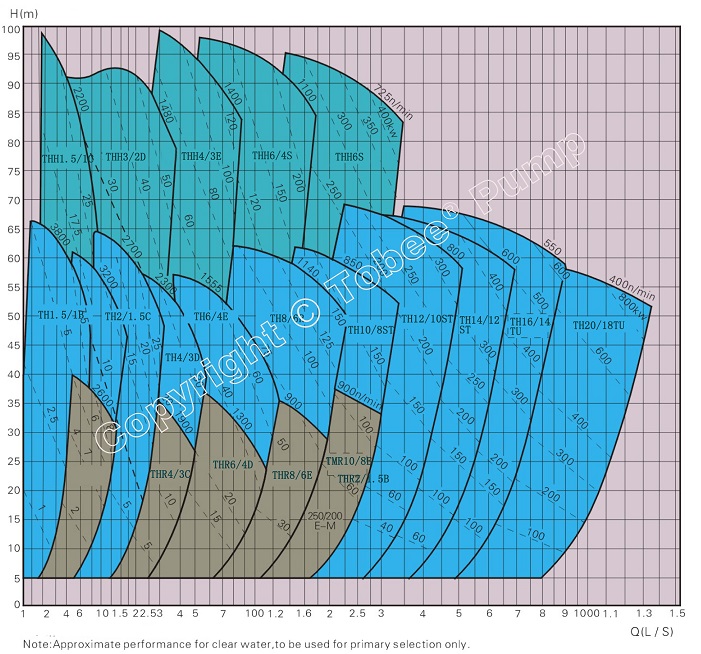
Total dynamic head (TDH) is the sum of static head, the vertical elevation difference between the liquid source and the discharge point; friction head, the energy lost to resistance in pipes, fittings, and valves; and pressure head, any additional pressure the fluid must be delivered against at the discharge point. A basic head calculation formula is expressed as TDH = Static Head + Friction Head + Pressure Head, all measured in consistent units, typically meters or feet of liquid column.
Net Positive Suction Head Available (NPSHa) describes how much suction-side pressure margin your actual system provides above the liquid vapor pressure, while Net Positive Suction Head Required (NPSHr) is a value the pump manufacturer determines through testing and publishes on the pump curve.
According to guidance published by the Hydraulic Institute, the leading standards-setting association for pump technology, NPSHa must exceed NPSHr by an adequate margin, commonly recommended at 1 meter or more depending on the pump specific speed and service, or the pump risks cavitation, in which vapor bubbles form at the impeller eye and collapse violently as pressure rises, causing pitting damage, noise, vibration, and a measurable drop in performance over time. Getting NPSH right at the design stage is far cheaper than replacing a cavitation-damaged impeller two years into service.
The Best Efficiency Point (BEP) is the single flow rate on the pump curve at which the pump converts input power into hydraulic output most effectively. Operating consistently near BEP minimizes radial shaft loading, vibration, seal wear, and bearing wear, while operating far to the left or right of BEP accelerates mechanical wear and increases energy cost even when the pump technically still meets flow and head requirements. Industry guidance commonly recommends keeping continuous operation within roughly 70 to 120 percent of BEP flow for centrifugal pumps to achieve a reasonable service life.
Centrifugal pumps are widely used for transferring and circulating relatively low- to medium-viscosity fluids across an enormous range of industrial and commercial systems, and the specific design details change substantially depending on which of these duties the pump serves.
Centrifugal pump water applications span municipal distribution networks, building water supply booster sets, and simple tank-to-tank transfer, where the fluid is clean, the viscosity is essentially that of water, and reliability and efficiency are the primary selection drivers.
Industrial centrifugal pumps circulate process water and cooling water, transfer chemicals, and handle general industrial fluid movement across manufacturing plants, where material compatibility with the specific chemical being handled often becomes the deciding factor in pump selection, ahead of pure hydraulic performance.
Centrifugal slurry pumps move ore slurry, tailings, and mineral concentrates that contain a significant proportion of abrasive solids by weight, sometimes exceeding 40 to 60 percent solids concentration in tailings transport lines. This is the application area where Tobee Pump concentrates much of its engineering effort, supplying heavy-duty, high-chrome and rubber-lined slurry pumps designed to survive the sliding and impact wear that a standard water pump could not withstand for more than a few weeks in comparable service.
Sewage transfer, industrial wastewater handling, sludge movement, and sump drainage all rely on non-clogging centrifugal pump designs capable of passing solids and fibrous debris without frequent blockage, which is why a dedicated centrifugal sump pump or sludge pump, rather than a general-purpose water pump, is the correct specification for this duty.
A marine centrifugal pump handles bilge water removal, seawater circulation for engine cooling, and general onboard fluid transfer, and it must be built from corrosion-resistant materials such as bronze, duplex stainless steel, or specialized alloys to withstand continuous exposure to saltwater.
Centrifugal transfer pumps move hydrocarbons, circulate process fluid, and support cooling and utility water systems across upstream, midstream, and downstream oil and gas facilities, typically requiring materials and seal arrangements certified to API 610, the American Petroleum Institute standard governing centrifugal pumps for petroleum, heavy duty chemical, and gas industry service.

The advantages of centrifugal pump technology explain why it remains the default choice across so many industries, but understanding the disadvantages is equally important to avoid misapplying it.
Corrosion resistance is achievable through stainless steel and specialized alloy construction for handling corrosive fluids. High energy and cost efficiency comes from efficient continuous fluid transfer and generally lower operating costs than comparable positive displacement technology in suitable duty. The straightforward design of a centrifugal pump, with relatively few moving parts, makes operation and maintenance easier than more mechanically complex pump types. Stable, continuous flow output suits process applications that cannot tolerate pulsation. A compact design gives centrifugal pumps a smaller footprint than many alternative pumping technologies of equivalent capacity.
On the disadvantage side, performance decreases meaningfully as fluid viscosity increases, so a centrifugal pump becomes progressively less suitable, and often uneconomical, for thick oils, syrups, and similar fluids. Conventional centrifugal pumps cannot pump air effectively and therefore require priming before use, which adds an operational step that positive displacement and truly self-priming designs avoid. Finally, centrifugal pumps are susceptible to cavitation when NPSH is insufficient, and to vibration when misaligned or operated away from BEP, both of which shorten service life if left unaddressed.
|
Free Quote |
• Pump operating point matters more than almost any other single factor, since running consistently near BEP, matched correctly to your actual flow and head requirement, preserves both efficiency and mechanical life.
• Impeller design, diameter, and any trimming performed to fine-tune performance to a specific duty point all directly affect where the efficiency peak sits on the curve.
• Motor efficiency, motor loading, and the use of a variable frequency drive (VFD) to match pump speed to varying demand can meaningfully reduce energy consumption, particularly in systems where flow demand fluctuates throughout the day.
• Fluid properties, including density, viscosity, temperature, corrosiveness, and solids concentration, all influence real-world efficiency versus the clean-water performance curve published by the manufacturer.
• Suction conditions and NPSH, covering suction pipe design, fluid level, and temperature, determine whether the pump can achieve its rated performance without cavitation.
Finally, pump and pipeline design decisions, including pipe diameter, friction losses, valve selection, and the avoidance of unnecessary bends and restrictions, all add up across the system and directly affect the total dynamic head the pump must overcome.
To put a number on why this matters: a study commissioned by the United States Department of Energy found that pumping systems account for close to 20 percent of the world electrical energy demand overall, and between 25 and 50 percent of electrical energy usage within certain industrial plant operations, making pumps the single largest consumer of electricity within industry across the European Union, where they draw over 300 terawatt-hours of electricity per year, accounting for more than 65 million tons of associated carbon dioxide emissions annually. That same body of research found that a large share of the installed pump base, roughly 20 to 30 percent, is oversized for its actual duty, which means correcting pump selection and operating point is one of the most cost-effective efficiency improvements available to almost any industrial facility.
Centrifugal pumps handle clean water, wastewater, chemicals, slurry, seawater, and general process fluids, though viscosity and solids content strongly influence which specific design, materials, and impeller type are appropriate. As a rough guide, standard centrifugal pumps perform well up to roughly 100 to 200 centistokes of viscosity, beyond which efficiency losses become significant and a positive displacement pump becomes the more sensible choice.
A standard centrifugal pump installed above the liquid source requires manual or automatic priming before every startup. A self-priming pump handles this internally using a reservoir of retained liquid. A submersible pump avoids the issue altogether because it is already immersed in the fluid it is moving.
As covered above, NPSHa versus NPSHr determines whether cavitation will occur, and getting this comparison right during suction system design is essential to protecting the impeller and maintaining rated performance over the life of the pump.
Choose based on your actual head requirement first: low head, high flow duties generally favor single-stage pumps, while high head duties favor multistage designs, with energy efficiency and application-specific considerations, such as available installation space, refining the final decision.
Installation space, maintenance access, suction conditions, and specific application requirements all factor into the horizontal-versus-vertical decision, and the comparison table earlier in this guide summarizes the key trade-offs between the two mounting orientations.
Centrifugal pump price varies according to pump size, casing and impeller material, motor power, required head and flow, configuration (single-stage versus multistage, horizontal versus vertical), and any special materials or features needed for corrosive or abrasive service. As a general point of reference drawn from independent energy-economics analysis of electric pump systems, total lifecycle pump cost is dominated not by the initial purchase price but by ongoing electricity consumption, which commonly represents 50 to 90 percent of total cost of ownership depending on pump size and duty cycle, while capital cost typically accounts for only 5 to 20 percent of the total. This is precisely why centrifugal pump price should never be evaluated on purchase cost alone; efficiency and material durability over the service life of the unit matter far more to total cost.
Flow rate, total head, fluid characteristics, casing and impeller material, motor power, efficiency, and the availability of spare parts and after-sales support should all factor into your decision when reviewing centrifugal pumps for sale. When you are comparing centrifugal pump suppliers, ask directly about wear part availability, warranty terms on castings, and whether the supplier can match or improve upon your current impeller and liner dimensions if you are replacing an existing pump, since dimensional interchangeability with an incumbent brand can significantly reduce downtime and installation cost.
Tobee Pump manufactures a broad range of centrifugal and slurry pump castings that are dimensionally interchangeable with several leading global brands, which allows plant engineers to source reliable replacement parts and complete pumps without redesigning existing piping and foundations.
A sound maintenance program inspects seals and bearings on a regular schedule, checks vibration and noise levels against a documented baseline, monitors motor current draw for early signs of mechanical resistance or cavitation, checks overall pump performance against the original curve, inspects the impeller and other wear components for erosion or clearance growth, checks suction and discharge pipelines for blockage or leakage, and follows a documented preventive maintenance schedule rather than a purely reactive one.
| Problem | Possible Cause | Recommended Action |
|---|---|---|
| Low flow | Clogged inlet or worn impeller | Inspect and clean the suction line and impeller |
| Low pressure | Wrong impeller or excessive wear | Check pump curve and impeller clearance |
| Excessive vibration | Misalignment or cavitation | Check shaft alignment and NPSH margin |
| Pump overheating | Dry running or overload | Stop the pump and inspect immediately |
| Seal leakage | Mechanical seal damage | Replace the mechanical seal |
| Excessive noise | Cavitation or bearing wear | Check suction conditions and bearing condition |
| Motor overload | Excessive flow or mechanical resistance | Check the actual operating point against the curve |
Safety precautions during any maintenance work should never be skipped: disconnect electrical power before beginning work, depressurize the system fully, follow lockout and tagout procedures, use appropriate personal protective equipment, never operate a pump outside its specified operating range, and avoid dry running unless the specific pump is expressly designed for it.
| Feature | Centrifugal Pump | Positive Displacement Pump |
|---|---|---|
| Operating principle | Dynamic, centrifugal force | Traps and displaces a fixed volume |
| Flow characteristic | Smooth and continuous | Pulsating or precisely controlled |
| High viscosity fluids | Generally less suitable | Often more suitable |
| High flow duty | Excellent | Depends on specific design |
| High pressure duty | Moderate to high, depending on stage count | Excellent |
| Maintenance | Relatively simple | Depends on design complexity |
| Typical use case | Water and low-viscosity fluid transfer | High-viscosity fluids and precise metering |
Installation method is the clearest distinguishing factor: a conventional centrifugal pump is installed dry, above or beside the liquid, while a submersible pump is installed directly in the liquid. Motor location follows from this, with the submersible motor sealed and immersed alongside the pump end. Priming requirements differ accordingly, since submersible pumps never need priming, while conventional centrifugal pumps generally do. Suction limitations also favor submersible designs in deep pits or wells, since there is effectively no practical suction lift to overcome when the pump sits in the fluid itself.
Maintenance accessibility, however, tends to favor the conventional dry-installed centrifugal pump, since it does not need to be pulled from a wet well or borehole to be serviced. For drainage and wastewater applications where the pit is deep, confined, or hazardous to access, a submersible pump is almost always the more practical choice, while for accessible, above-ground installations where straightforward maintenance access matters most, a conventional centrifugal pump remains the preferred option.
Step 1 — Pump Is Installed Below the Liquid Level. The entire pump and motor assembly is lowered into the wet well, sump, tank, or borehole so that it sits fully submerged in the fluid it will move.
Step 2 — The Motor Drives the Impeller. A sealed, waterproofed electric motor, directly coupled to the pump shaft, drives the impeller at the design rotational speed.
Step 3 — Fluid Enters Through the Pump Inlet. Liquid is drawn into the impeller eye through a strainer or inlet screen designed to keep larger debris out of the hydraulic passages.
Step 4 — The Impeller Increases Fluid Velocity. As with any centrifugal design, the rotating impeller accelerates the fluid outward through centrifugal force, following the same working principle described earlier in this guide.
Step 5 — Pressure Converts the Flow Into Discharge Head. The volute casing surrounding the impeller slows the accelerated fluid and converts that velocity into pressure, pushing the liquid up the discharge riser pipe and out of the pit or well.
Pump head expresses the energy a pump imparts to a fluid in terms of the height of a liquid column that energy could theoretically support, measured in meters or feet rather than in units of pressure directly, which makes it easier to compare pumps of different sizes handling fluids of different densities on a common basis.
As introduced earlier, total dynamic head equals the sum of static head, friction head, and any required pressure head at the point of delivery: TDH = Static Head + Friction Head + Pressure Head.
Static head is fixed by the physical elevation difference in your system and does not change with flow rate, while total dynamic head also includes friction losses, which increase roughly with the square of flow rate, meaning your system real head requirement rises as you push more flow through the same piping.
Because centrifugal pumps produce a curve where head decreases as flow increases, any change in your systems resistance, such as a partially closed valve or a fouled strainer, shifts your operating point along that curve, which explains why a pump can deliver noticeably different flow rates in the field compared with its rated design point.
Plot your system own head-versus-flow curve, accounting realistically for elevation, pipe friction, and any required discharge pressure, and select a pump whose published curve intersects your system curve as close to its Best Efficiency Point as possible, rather than simply matching the nameplate flow and head numbers in isolation.
|
Talk to Us |
Limestone slurry presents its own distinct handling challenge within the broader centrifugal slurry pump category, since limestone particles are moderately abrasive and are frequently processed at high solids concentration in flue gas desulfurization and lime handling systems.
1. Matching required flow and head accurately to the actual duty, without unnecessary oversizing, protects the pump from operating away from its Best Efficiency Point.
2. Abrasion-resistant materials, typically high-chrome white iron or natural rubber linings depending on particle size and slurry concentration, extend wet-end service life substantially compared with standard cast iron construction.
3. Impeller and liner selection should account for particle size distribution and slurry density, since a liner and impeller combination optimized for fine limestone slurry will wear very differently than one selected for a coarser mixture.
4. Matching a slurry pump correctly to the application, rather than defaulting to a generic centrifugal pump, is the single decision that most affects wear part life and total cost of ownership in limestone handling systems.
Tobee Pump supplies a dedicated range of limestone and mineral slurry pumps engineered specifically for this duty; if your operation is evaluating slurry pump options in more depth, our slurry pump product range covers the metallurgy, impeller geometry, and sizing guidance this application demands.
A centrifugal pump is, at its core, a rotodynamic machine that converts rotational energy into fluid pressure and flow through an impeller and volute casing, and understanding that working principle is the foundation for everything else in this guide. Across single-stage, multistage, self-priming, submersible, vertical, inline, magnetic drive, sewage, and slurry configurations, the underlying physics stays the same, while the materials, clearances, and impeller geometry change substantially to suit the fluid being handled. Centrifugal pumps serve water supply, industrial process, mining, wastewater, marine, and oil and gas applications precisely because that underlying physics scales so well across such different flow, head, and fluid conditions.
Matching flow, head, fluid properties, NPSH, and operating point to your actual system requirement, rather than selecting a pump on flow and head numbers alone, is what determines whether you get years of reliable service or a pattern of premature seal, bearing, and impeller failures. Select and specify your next centrifugal pump based on your actual system requirements, not on the size of pump you already have installed.
If you are specifying a centrifugal pump, a slurry pump, or a submersible pump for your project and want engineering input on sizing, materials, or wear part compatibility, the Tobee Pump engineering team is available to review your application and recommend the right configuration for your flow, head, and fluid conditions.
What Is a Centrifugal Pump?
A centrifugal pump is a rotodynamic pump that uses a rotating impeller to convert rotational kinetic energy into fluid pressure and flow.
What Is a Centrifugal Pump Used For?
Centrifugal pumps are used for transferring and circulating water, chemicals, slurry, wastewater, and other relatively low-to-medium-viscosity fluids across municipal, industrial, mining, marine, and oil and gas applications.
Are Centrifugal Pumps Positive Displacement?
No. Centrifugal pumps are dynamic pumps that rely on velocity and pressure conversion, while positive displacement pumps trap and physically displace a fixed volume of fluid on each cycle.
Are Centrifugal Pumps Self-Priming?
Conventional centrifugal pumps are not self-priming and require the casing and suction line to be filled with liquid before startup. Self-priming centrifugal pumps are a distinct design that retains liquid inside the casing to evacuate air automatically.
Are Submersible Pumps Centrifugal?
Yes, the great majority of submersible pumps use a centrifugal hydraulic design, packaged with a sealed motor so the entire unit can operate fully immersed in the fluid.
Can Centrifugal Pumps Run Dry?
Standard centrifugal pumps cannot run dry for more than a very short period without risking seal damage and overheating, since the fluid itself provides cooling and lubrication to the mechanical seal and bearings.
What Is a Vertical Centrifugal Pump?
A vertical centrifugal pump mounts its shaft vertically, reducing the floor footprint and suiting sump, pit, and cooling tower installations.
What Is a Horizontal Centrifugal Pump?
A horizontal centrifugal pump mounts its shaft horizontally, offering easier maintenance access and remaining the standard configuration for general industrial and water transfer duty.
What Is Cavitation in a Centrifugal Pump?
Cavitation occurs when insufficient NPSH allows vapor bubbles to form at the impeller eye and then collapse violently as pressure rises, causing noise, vibration, and progressive pitting damage to the impeller.
What Is a Stainless Steel Centrifugal Pump?
A stainless steel centrifugal pump uses stainless steel for the wetted components, providing corrosion resistance for chemical, food-grade, marine, and other applications where cast iron would corrode too quickly.
What Is a Multistage Centrifugal Pump?
A multistage centrifugal pump arranges two or more impellers in series within a single casing so that each stage adds additional head, allowing the pump to reach far higher pressures than a single-stage design.
What Is the Difference Between a Single-Stage and Multistage Centrifugal Pump?
A single-stage pump uses one impeller and suits moderate head requirements, while a multistage pump uses multiple impellers in series to achieve significantly higher head at the cost of greater mechanical complexity.
What Are the Different Centrifugal Pump Impeller Types?
Open, semi-open, closed, and vortex impellers are the main types, selected according to the solids content and efficiency requirement of the application.
What Is Total Head in a Centrifugal Pump?
Total head, or total dynamic head, is the sum of static head, friction head, and any required discharge pressure head that the pump must overcome.
What Is NPSH of a Centrifugal Pump?
NPSH, or Net Positive Suction Head, describes the suction-side pressure margin above the fluid vapor pressure, with NPSH Available compared against NPSH Required to determine whether cavitation risk exists.
What Is the Best Efficiency Point (BEP) of a Centrifugal Pump?
BEP is the flow rate at which the pump converts input power into hydraulic output most efficiently, and operating near this point minimizes wear and energy waste.
How Do You Prime a Centrifugal Pump?
You prime a centrifugal pump by filling the casing and suction line with liquid before startup, either manually through a priming port or automatically through a foot valve, vacuum system, or self-priming design.
How Often Should a Centrifugal Pump Be Maintained?
Maintenance frequency depends on duty and fluid, but most industrial centrifugal pumps benefit from routine seal, bearing, and vibration checks on a monthly basis, with a full performance and wear inspection at least annually or per manufacturer recommendation.
 Sara Liang
 +86 189 3110 6396 (Whatsapp/Wechat)
 Inquiry@tobeepump.com
• How to Choose the Right Sand Pump for Grit Handling Applications
• How to Select the Best Sump Pump for Mining, Construction, and Dewatering
• How to Choose the Right Gravel Pump for Heavy-Duty Applications
• Understanding Slurry Pumps: Working Principles, Pump Types, and Care Guide
• The Complete Guide to Submersible Pumps: Everything You Should Know
• How Does a Self-Priming Pump Work? Types, Advantages, and Industrial Applications


